duminică, 2 septembrie 2012

Viticultural heritage

From the pruning knife who cut the first vine shoot to the wine press who crush the grapes, the wine journey is marked with archaic believes, magical practices and economic aspects of the traditional life.
Wine is a ritual drink of the calendar holidays (Easter, Christmas, 40 Martyrs an so on) and of life cycle events (birth, anniversary, wedding, funeral).
Here you can visualize some objects used in the annual journey of wine. 
Pruning knife

Back basket to transport grapes

Back basket to transport grapes

Stick for beating the grapes

Cart - vase for pressing the grapes

Vase for collecting the grape must

Funnel

Keg with funnel

Keg

Keg

Enhanced by Zemanta

joi, 30 august 2012

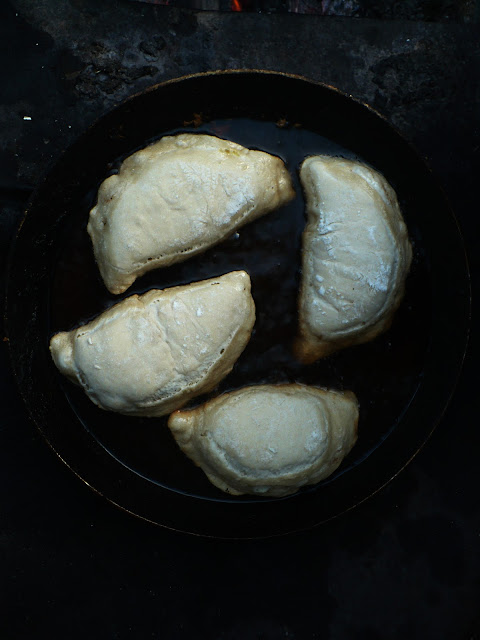
Tasty recipe: Pirahi

Dough:
  • 3/4 cup yogurt/whey
  • 1/4 cup water
  • baking soda
  • salt
  • flour

Mix all ingredients to make dough. Let rise it half an hour. Pinch off dough about the size of a small egg, form into a ball and place on floured board. Roll each ball out into a small circle.
Cheese Filling: a mix of cheese and egg yolks
Cook pirahi in oil, preferably on the stove. Then taste them...


Enhanced by Zemanta

marți, 28 august 2012

Sing and dance in Russian - Lipovan style

In Sulina city (Romania) lives a community of Old Believers/Starovery/Lipovans (504 souls - National Census from 2002). They preserved the traditional costume (for church and for spectacles). The head of married women must be covered with a chicika (a little bonnet) and the long skirt must cover the ankles. 
A part of  their actual identity is represented by songs from Russian motherland and dances influenced by the Russian Ballet.
  Russian - Lipovan Ensemble Chaika from Sulina City (Dobrogea region - Romania)

Russian - Lipovan Ensemble Chaika from Sulina City (Dobrogea region - Romania)
Chaika/Чайка means  Seagull.
 Here you can listen a song here. 


Russian Dances Group  from Sulina City (Dobrogea region - Romania)

Russian Dances Group  from Sulina City (Dobrogea region - Romania)

Russian Dances Group  from Sulina City (Dobrogea region - Romania)

Enhanced by Zemanta

vineri, 10 august 2012

Golden Little Fish Festival - second night

In the second night of the Golden Little Fish Festival performed on stage ensembles from Romania (Tulcea, Maramureș, Suceava, Mureș and Olt Counties), Republic of Macedonia, Turkey and Bulgaria. Audience could admire the beauty of folk costumes from different ethnographic zones and the scenic transposition of customs and historic events (Orata Kopata - Macedonia, Harvest Day and Călușari - Romania, war in Balkans - Turkey, children folklore dances - Bulgaria). 
Romania - Ensemble Doina Casimcei from Casimcea, Tulcea County

Romania - Ensemble Doina Casimcei from Casimcea, Tulcea County

Romania - Ensemble Doina Casimcei from Casimcea, Tulcea County

Romania - Ensemble Mugurelul from Sighetu Marmației, Maramureș County

Romania - Ensemble Mugurelul from Sighetu Marmației, Maramureș County

Romania - Ensemble Plai de dor from Niculițel, Tulcea County

Romania - Ensemble Plai de dor from Niculițel, Tulcea County

Kitka  Ensemble from Republic of Macedonia

Kitka Ensemble from Republic of Macedonia

Kitka Ensemble from Republic of Macedonia

Romania - Ensemble Plaiurile Dornelor from Vatra Dornei, Suceava County

Romania - Ensemble Plaiurile Dornelor from Vatra Dornei, Suceava County

Romania - Ensemble Românașul from Albești, Mureș County

Romania - Ensemble Românașul from Albești, Mureș County

Ensemble from Turkey - choreographic representation of war

Ensemble from Turkey

Ensemble from Turkey

Ensemble from Turkey

Ensemble from Bulgaria

Ensemble from Bulgaria

Ensemble from Bulgaria

Ensemble from Bulgaria

Romania - Ensemble Călușul Junior from Scornicești, Olt County

Romania - Ensemble Călușul Junior from Scornicești, Olt County - Călușari Dance

Enhanced by Zemanta