joi, 9 august 2012

Golden Little Fish Festival - first night

In Tulcea is organized yearly the Golden Little Fish Festival (20st edition this year). In the first night of contest performed  on stage ensembles from Romania (Tulcea, Harghita, Constanța and Timiș Counties), Slovakia, Montenegro and Republic of Moldova.  
Romania - Dorulețul Ensemble from Tulcea

Romania - Dorulețul Ensemble from Tulcea

Romania - Dorulețul Ensemble from Tulcea

Romania - Ensemble from Miercurea Ciuc - Magyar and Gypsy dances 

Romania - Ensemble from Miercurea Ciuc - Magyar and Gypsy dances 

Romania - Ensemble from Miercurea Ciuc - Magyar and Gypsy dances 

Romania - Ensemble Dobrogeanca from Ovidiu, Constanța County

Romania - Ensemble from Ovidiu, Constanța County

Romania - Ensemble  Doina Timișului from Timiș County

 Ensemble from Slovakia

Ensemble from Slovakia

Ensemble from Slovakia

Ensemble from Montenegro 

Ensemble from Montenegro 

Ensemble from Montenegro 

Republic of Moldova - Ensemble from Cahul County - traditional, stylized and Gypsy dances

Republic of Moldova - Ensemble from Cahul County - traditional stylized dances

Republic of Moldova - Ensemble from Cahul County - traditional stylized dances

Republic of Moldova - Ensemble from Cahul County -  Gypsy dances

Republic of Moldova - Ensemble from Cahul County -  Gypsy dances

Enhanced by Zemanta

marți, 7 august 2012

Eco Kids


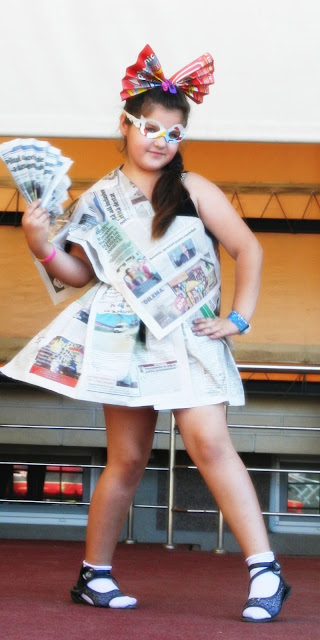
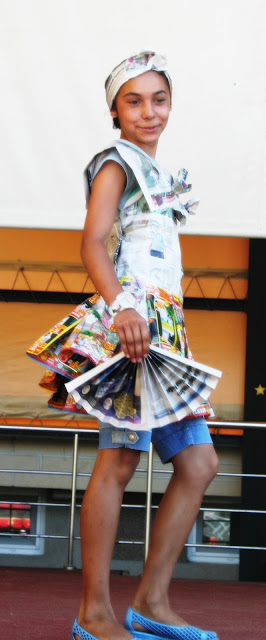
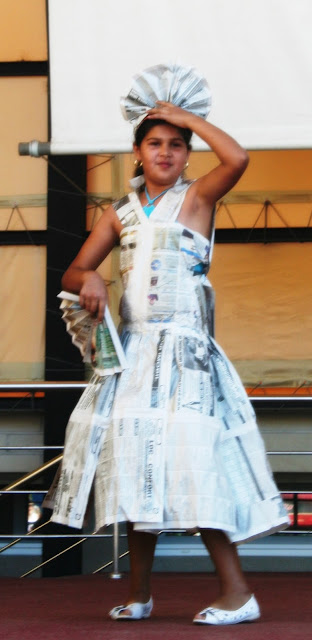
The idea of recycling touches many domains, even fashion. Students from School of Arts and Crafts No. 3 Tulcea (Dobrogea, Romania) demonstrated it in a fashion show connected with the Little Ethnographers Awards. They were the creators of clothes and the models who presented them. Kids used materials like newspaper, crêpe paper, cellophane, plastic. You can see the results in this photo set.


Enhanced by Zemanta

sâmbătă, 4 august 2012

Art loves artist

Art requires passion, devotion, talent, sacrifice and time. In the past, the iconographer isolated himself from the rest of the world (in caves or woods) for the perfection of his icon, seen like the word-image revelation of Divinity. 
The know-how of crafts is still transmitted to the young generation, in different occasions and places:  creation workshops, contests, young centers, open-air and folk art museums, centers of preservation of tradition and folk culture etc. Of course, many of crafts are in regression (e.g. weaving in the loom), but others reinvent themselves, in modern coordinates. 
Pottery
  
Pottery

Decorative arts - Clay mask
Sewing

Sewing

Painting icons on glass

Painting icons on wood
 
Easter eggs

Enhanced by Zemanta

miercuri, 1 august 2012

Treasures of folk art


The dynamic movement of decorative textile structure, from simple to complex, the various associations of lines or different patterns (geometric, avimorph, zoomorph, anthropomorph) and the chromatic repertoire offer an expressivity to the form and accentuate the harmony of composition, transforming objects in real treasures of folk art.
 
In the ornamental composition of textile appear stylized patterns like: the star, the nut, the Easter cake, the rose, the tulip, the bouquet, the grapevine, the trees, the horse, the girls, the Romanian circle dance, the birds (water birds, martin).
Interweaving in their structure the intelligence and the fantasy of the woman, textiles generate a holiday note in the inside space, organized according one scenography who preserve and break the canons in the same time.

 
In the Romanian mentality, the tree of life appears in mythical representations of the life cycle, calendar activities and holydays of the year.
The presence of tree of life in the decorative structure of traditional textiles demonstrate the link between human and nature as constant medium  of material and spiritual life.


Wood is a decorative material par excellence, because his natural color and quality, by itself structure. Traditional decoration is achieved by notching. Dominant patterns are geometric e.g. solar wheel, tooth of wolf.

 
The patterns have an important role in the ornamental composition of textiles.
The pattern repertoire demonstrates the fact that the human transpose in his creation environmental elements.
Quotidian has been immediately placed in the woman’s art of garnishing the interior of the room. And so she engraved to space a holiday note.


Decorative textiles are decorated woolen, cotton or natural silk fabrics, in general, with geometric, phytomorphic or avimorphic patterns. The patterns are naturalistic or stylized.


Enhanced by Zemanta